
 Image 1 of 1
Workshop Learning Report
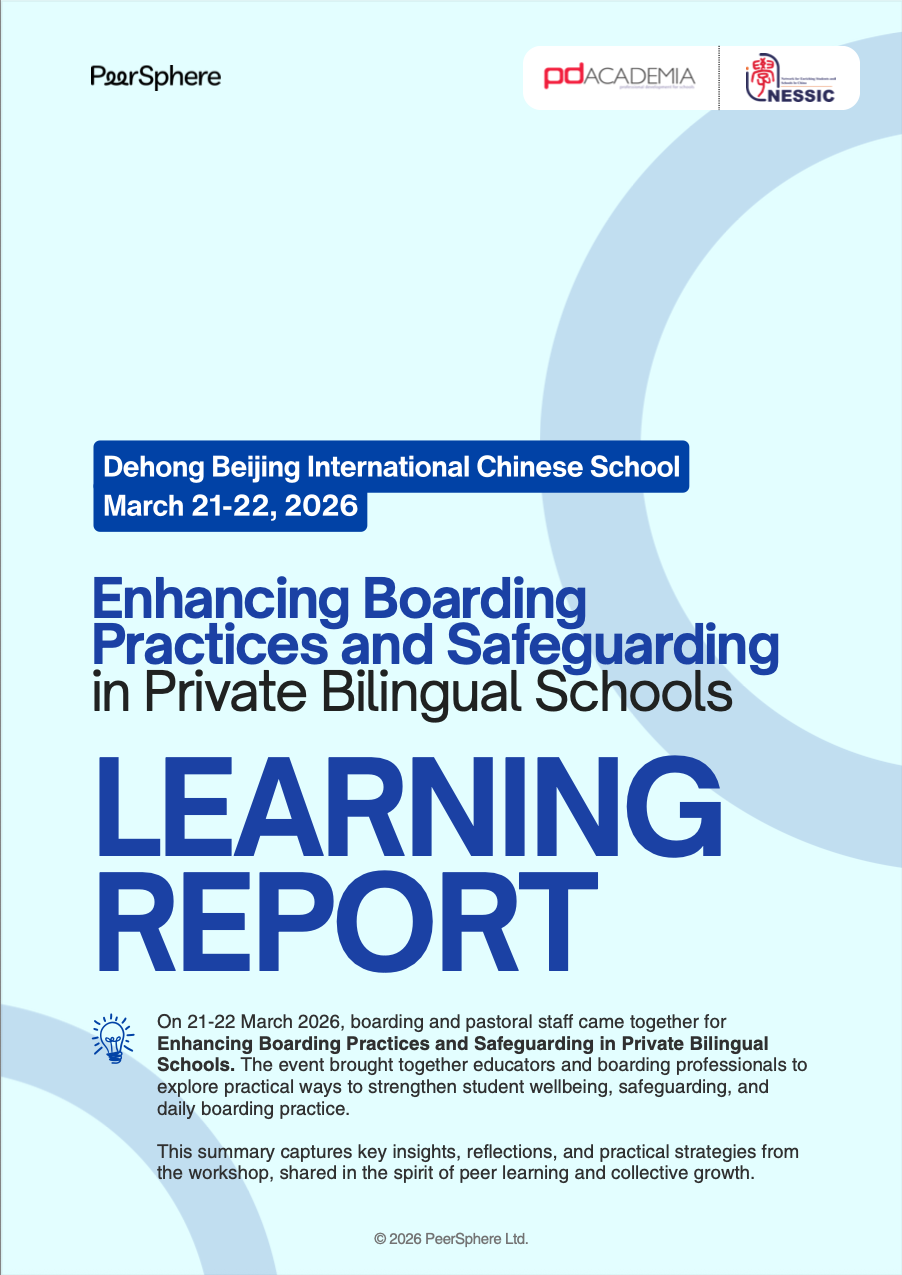
A practical guide for boarding and pastoral staff focused on strengthening residential care and safeguarding in private bilingual school contexts. This resource explores how to balance supportive student relationships with reliable operational systems to protect both students and adults within boarding environments.
Core Focus:
Building community trust and supportive environments through consistent adult behavior and everyday communication.
Implementing proactive and immediate support structures to address homesickness, emotional strain, and student adjustment.
Understanding safeguarding responsibilities, legal obligations, and local authority expectations within China.
Key Insight:
Effective safeguarding depends on reliable systems, clear reporting pathways, and shared responsibility rather than individual goodwill or good intentions alone.
A safer boarding culture relies heavily on the collective reporting mindset: "Notice it, share it, and do not carry it alone".
Staff wellbeing and resilience are core components of safe practice, requiring sustainable team routines for recovery, reset, and debriefing to maintain professional care over time.
Practical Tools:
Active listening, paraphrasing, and communication techniques to help students feel heard rather than judged.
Proactive routines, peer systems, and family inclusion strategies to manage the physical and academic symptoms of homesickness.
Whole-school safeguarding review self-assessment materials covering governance, training, culture, reporting, online safety, and community voice.
Best for:
Boarding masters/mistresses, residence coordinators, and pastoral care staff.
School leaders, safeguarding officers, and administrators in private bilingual school settings.
March 2026 | Beijing, China
Workshop Learning Report
A practical guide for boarding and pastoral staff focused on strengthening residential care and safeguarding in private bilingual school contexts. This resource explores how to balance supportive student relationships with reliable operational systems to protect both students and adults within boarding environments.
Core Focus:
Building community trust and supportive environments through consistent adult behavior and everyday communication.
Implementing proactive and immediate support structures to address homesickness, emotional strain, and student adjustment.
Understanding safeguarding responsibilities, legal obligations, and local authority expectations within China.
Key Insight:
Effective safeguarding depends on reliable systems, clear reporting pathways, and shared responsibility rather than individual goodwill or good intentions alone.
A safer boarding culture relies heavily on the collective reporting mindset: "Notice it, share it, and do not carry it alone".
Staff wellbeing and resilience are core components of safe practice, requiring sustainable team routines for recovery, reset, and debriefing to maintain professional care over time.
Practical Tools:
Active listening, paraphrasing, and communication techniques to help students feel heard rather than judged.
Proactive routines, peer systems, and family inclusion strategies to manage the physical and academic symptoms of homesickness.
Whole-school safeguarding review self-assessment materials covering governance, training, culture, reporting, online safety, and community voice.
Best for:
Boarding masters/mistresses, residence coordinators, and pastoral care staff.
School leaders, safeguarding officers, and administrators in private bilingual school settings.
March 2026 | Beijing, China