

Photo by Mimi Thian on Unsplash
By LeeAnne Lavender, PeerSphere Storyteller
Peer learning communities (PLCs) can offer a transformative approach to professional development for teachers, presenting an alternative to more traditional professional development.
The key is the power of collaborative learning that is foundational in highly functioning PLCs. Shared values and visions, collective learning, common practices, and participatory leadership can be held in common by PLC members, which generates camaraderie and trust. In turn, this encourages teachers to engage in reflective practices, share their experiences, and collectively explore innovative teaching strategies.
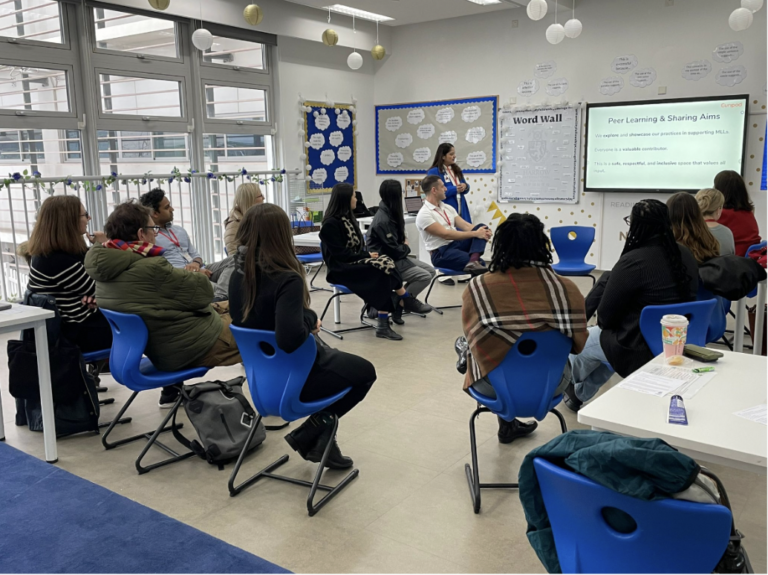
This was evident in so many ways at a recent in-person PeerSphere PLC event at Harrow International School in Shanghai. The English as an Additional Language PLC group, which has been meeting online, had an opportunity to gather together and experience a full day of peer learning through an “unconference” style event.
“When you don’t have a facilitator and [a workshop] is not being run by school management, it very much shifts engagement between participants. It takes away the hierarchy. The dynamic of that raised a lot of interesting ideas and gave a platform to many people who wouldn’t normally have a platform,” says Simon Probert, Deputy Head of Harrow Shanghai.
This is the heart of peer learning: a shared floor where participants learn from and with each other.
This culture of learning produces a shared understanding of teaching goals, methods, and challenges; the learning environment encourages teachers to discuss problems, share resources, and apply effective teaching practices more consistently.
Celia Matthews (EAL Learning Lead at Shenzen International School), a key organizer of the PeerSphere EAL event, explains it this way: “At a conference, it might be difficult to take information from a presentation and fit it into your context. In this setting, it was a boots-on-the-ground experience with others in similar contexts. Everyone could ask questions in a non-judgmental, non-evaluative manner.”
The peer learning dynamic can, as seen in this example, be quite different from more traditional professional learning options such as off-site or on-site workshops that aren’t paired with meaningful coaching and/or contextual relevance.
By fostering an environment of collaborative learning, reflection, and shared leadership, PLCs have tremendous potential for transforming teachers’ knowledge, mindsets and practices. If you haven’t had a chance to experience a PLC yet, check out PeerSphere options for 2024/25!