
 Image 1 of 1
EAL Symposium Learning Report
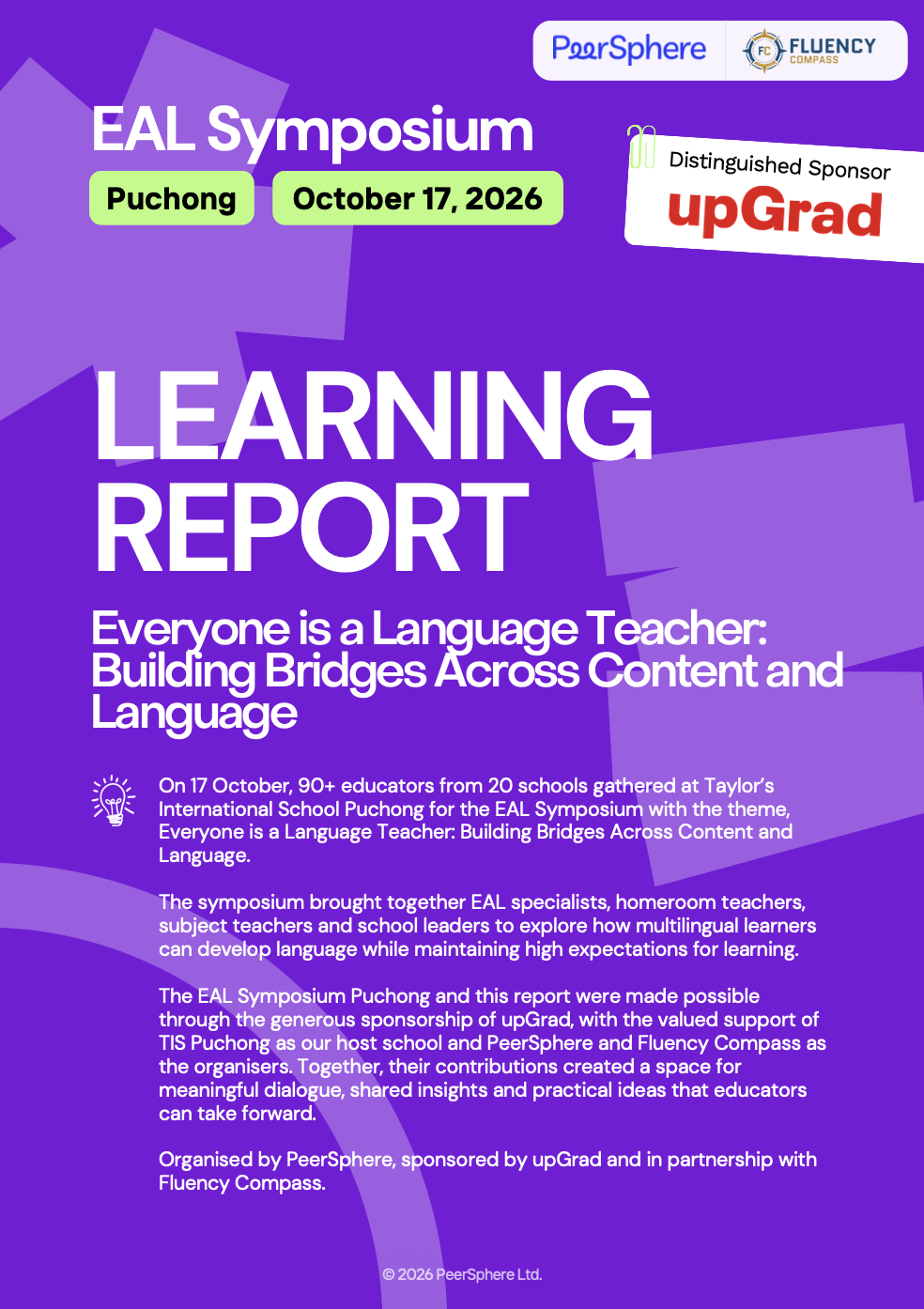
A practical guide to supporting multilingual learners across the curriculum. Drawing on the ideas shared by more than 90 educators from 20 schools, this report brings together classroom strategies and whole-school considerations from the symposium Everyone is a Language Teacher: Building Bridges Across Content and Language.
Core Focus:
Making subject content accessible without lowering academic expectations.
Planning for the language students need to discuss and demonstrate their learning.
Recognising home languages as resources for thinking and participation.
Building collaboration between EAL specialists, classroom teachers and school leaders.
Key Insights:
Small, intentional scaffolds can help students engage with challenging ideas.
English proficiency scores tell only part of a learner’s story; previous schooling, home-language literacy and learning experiences matter too.
Language development is a shared responsibility that needs support through school systems as well as individual teaching practice.
Practical Tools:
Structured talk before writing and sentence starters for academic explanations.
Substitution tables, visuals and dual coding to make complex concepts more accessible.
Home-language brainstorming and bilingual vocabulary support.
Fuller learner profiles to inform teaching decisions.
Ways to use AI to prepare differentiated language scaffolds while retaining the same learning goals.
Best for:
Homeroom and subject teachers seeking strategies they can use in everyday lessons.
EAL specialists and learning support teams working alongside classroom colleagues.
School leaders and curriculum coordinators developing a more consistent approach to multilingual learning.
October 17, 2026 | Taylor’s International School Puchong, Malaysia